
Are Master of Divinity Degrees Dead? What 2026 Data Says
Many prospective ministry leaders carry the same concern: Is a master of divinity still worth the cost, time, and sacrifice in 2026? Headlines about declining church membership, pastoral burnout, student debt, and congregational closures can make the traditional seminary path appear uncertain.
The honest answer is that the master of divinity degree is not dead. The degree remains a central path for pastoral formation, but the way students pursue it is changing. The traditional three-year residential model is no longer the only serious option for theological education.
New data from the Association of Theological Schools shows that graduate theological education remains active and significant. The current question is not whether ministry preparation is needed. It is whether seminaries can provide rigorous, affordable, and practical formation for the people God is calling today.
What 2026 Data Says About the Master of Divinity
According to the Association of Theological Schools’ institutional and student data, graduate theological enrollment in the United States and Canada has reached its highest level since ATS began tracking enrollment in 1969.
The 2026 data reported by In Trust Center for Theological Schools identifies 74,283 people pursuing graduate theological degrees. Another 7,081 students were enrolled in credit-bearing, non-degree programs. Together, these figures represent more than 81,000 people engaged in graduate theological education.
The master of divinity remains one of the largest professional degrees in theological education. About one-third of graduate theological students are pursuing an M.Div., and the number of M.Div. students increased in the most recent reporting year.
The data points to a changing field, not a dying degree:
Graduate theological enrollment is at a historic high.
The master of divinity remains a leading professional degree.
More students are studying through hybrid and fully online formats.
Working adults, second-career students, and older learners represent a growing part of the student body.
Congregations continue to need trained leaders for preaching, teaching, pastoral care, worship, and community service.
Approximately 48 percent of students are now studying fully online or through highly flexible formats, according to 2026 reporting on ATS enrollment patterns. This shift shows that delivery is changing because student lives are changing.
Students are more likely to be employed, raising families, serving congregations, or living far from a residential seminary. Many are already engaged in ministry and need education that strengthens their work instead of requiring them to leave it.
Why Some People Think the Degree Is Disappearing
The concern about the master of divinity is not without reason. Some seminaries have reduced residential enrollment, closed programs, or shifted resources toward shorter professional degrees. Traditional M.Div. programs can also require relocation, full-time study, and significant living expenses.
The pastor shortage has added to the concern. A 2026 Axios report on the pastoral leadership pipeline describes declining enrollment in some traditional ministry pathways, clergy retirement, burnout, and the difficulty many congregations face when seeking qualified leaders.
These challenges should not be ignored. However, they do not prove that theological education has become unnecessary. They show that the church needs better pathways for preparing leaders who can serve in rural, urban, multicultural, small, and financially limited congregations.
The shortage is also uneven. Some congregations struggle to call a pastor, while some trained leaders face limited opportunities because of location, denominational expectations, compensation, or the changing shape of church ministry. The need is not only for more graduates. It is for leaders whose education is relevant to the communities they are called to serve.
The Delivery Model Is Changing
For generations, the standard M.Div. pathway involved three years of residential study. Students moved to a seminary campus, attended scheduled courses, participated in supervised ministry, and completed a broad curriculum in biblical studies, theology, church history, preaching, worship, and pastoral care.
That model can still serve some students well. Residential community, daily chapel, faculty access, and shared formation remain valuable. Yet the traditional structure is difficult for many adults who cannot leave employment, family, community, or current ministry responsibilities.
An accredited, competency-based, self-paced M.Div. pathway offers a different structure. It places learning in the student’s ministry context and evaluates what the student can understand, practice, and demonstrate.
The contrast can be summarized this way:
Traditional residential model | Competency-based, in-context model |
Fixed academic calendar | Flexible progression based on demonstrated learning |
Relocation may be required | Study remains connected to the local church and community |
Seat time is a major measure | Ministerial competencies guide assessment |
Ministry practice may occur later | Ministry practice is integrated throughout formation |
Costs may include tuition, housing, and relocation | Students may remain employed and rooted in their communities |
A self-paced model does not mean an easier model. A serious program still requires theological reading, writing, reflection, assessment, spiritual formation, and accountability. The difference is that students demonstrate learning through meaningful work rather than relying only on classroom attendance.
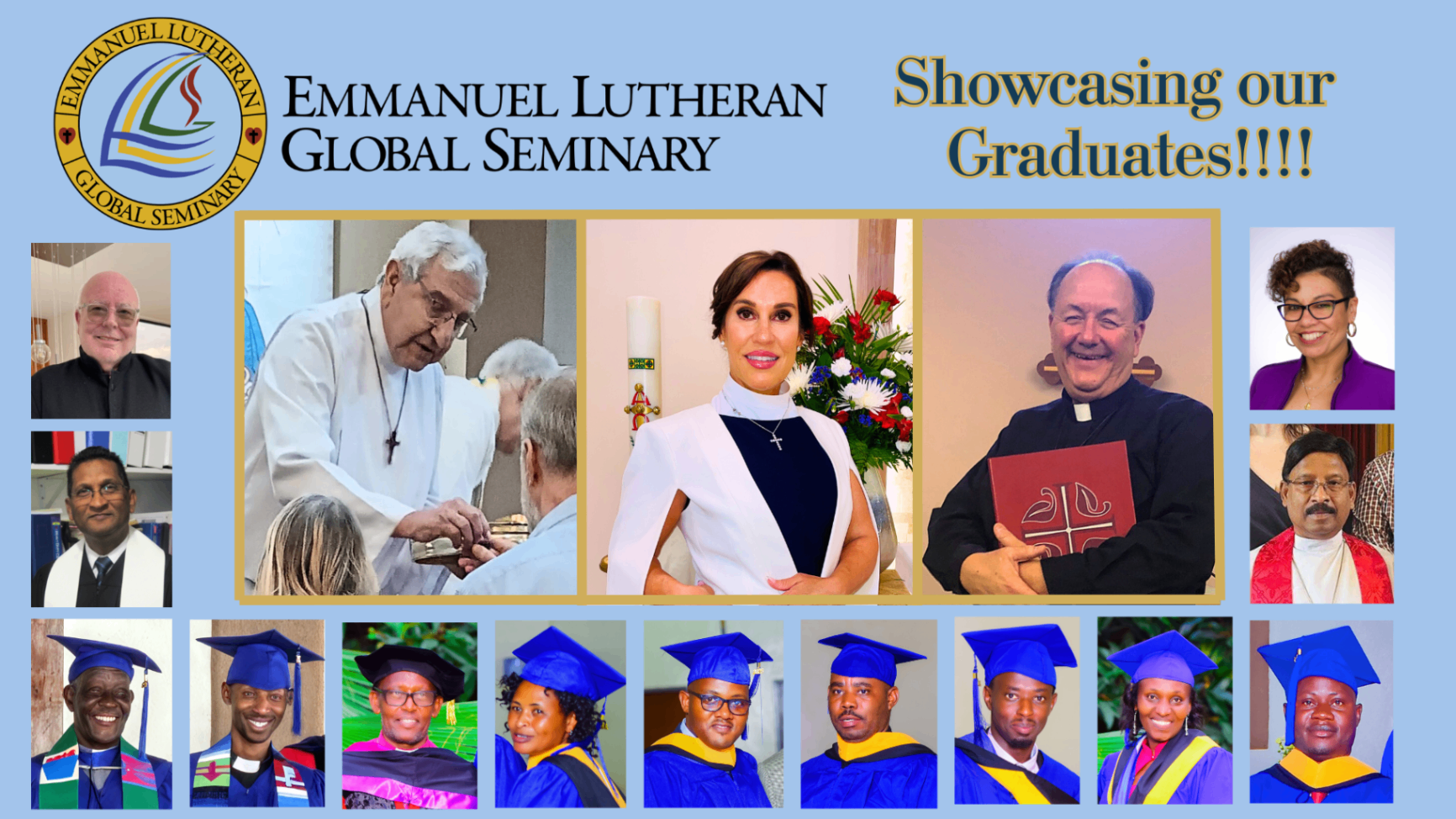
At Emmanuel Lutheran Global Seminary, competency-based theological education connects academic study with the real work of ministry. The ELGS guide to competency-based theological education explains how students develop knowledge, skills, character, and pastoral judgment through learning in context.
What to Look for in a Program
A prospective student should evaluate more than a program title or delivery format. Whether a person searches for an accredited seminary or an “online seminary accredited,” the central issue is the quality and credibility of the formation offered.
Before enrolling, students should ask five questions.
1. Is the program properly accredited or authorized?
Students should understand the institution’s accreditation, authorization, and degree-recognition status. Accreditation should be clearly explained, and the program should identify the standards used to evaluate academic quality.
Students should also ask whether the degree meets the requirements of the denomination, synod, diocese, or ecclesial body in which they hope to serve. Academic recognition and denominational recognition are related, but they are not always identical.
2. Are ministerial competencies clearly defined?
A strong program should explain what graduates are expected to know and do. Competencies may include:
Biblical interpretation and theological reasoning
Preaching and Christian education
Pastoral care and spiritual formation
Worship planning and leadership
Christian ethics and public witness
Congregational administration
Conflict engagement and reconciliation
Cross-cultural communication
Community service and mission development
A program should show how each competency is taught, practiced, assessed, and connected to ministry.
3. Does the student receive guidance from a mentor team?
Theological formation should not be isolated. Students need faculty guidance, pastoral mentorship, peer engagement, and feedback from trusted leaders.
A mentor team can help a student connect academic learning with congregational life. It can also identify areas that require further development, encourage spiritual maturity, and support vocational discernment.
4. Is the cost transparent?
Prospective students are right to examine the full financial commitment. Tuition, fees, books, travel, technology, and time away from work can all affect the return on investment.
An affordable program should clearly explain its pricing structure and payment expectations. Students should also ask whether the model allows them to remain employed and avoid relocation costs. ELGS emphasizes the goal of helping students graduate without the burden of traditional debt whenever possible.
The ELGS article on debt-free ministry explores why financial sustainability matters for future pastors and congregations.
5. Does the program meet denominational requirements?
The M.Div. is often connected to ordination, call processes, supervised ministry, and ecclesiastical review. A prospective student should speak with denominational leaders before beginning the degree.
The right program should support the student’s calling while also respecting the standards of the church body where the student hopes to serve.
Is a Master of Divinity Worth It in 2026?
A master of divinity is worth pursuing when it supports a clear vocational purpose and provides credible preparation for service. The degree is especially valuable for students preparing for ordained ministry, pastoral leadership, chaplaincy, church planting, or other roles that require broad theological and ministerial formation.
The return on investment is not limited to future salary. It includes the ability to interpret Scripture faithfully, preach with clarity, provide responsible pastoral care, lead worship, guide congregational decisions, and serve communities with wisdom.
A flexible program may also improve the financial return on the degree. Students can remain in their current employment, continue serving their congregations, and apply learning immediately. This approach can reduce relocation costs and help graduates enter ministry with less educational debt.
The ELGS programs page provides additional information for students considering an affordable and flexible path to theological education.
Who Should Still Get an M.Div.?
The master of divinity remains a strong choice for several groups of students:
Those pursuing ordained pastoral ministry in a denomination or ecclesial tradition that expects an M.Div.
Working adults and second-career students who need a flexible path connected to their current responsibilities.
Lay leaders sensing a deeper call to preaching, pastoral care, teaching, or congregational leadership.
Current ministry workers who need broader theological preparation and formal academic credentials.
Students seeking disciplined formation through biblical study, theological reflection, mentoring, and practical ministry.
Leaders preparing to serve diverse communities across cultural, geographic, and economic settings.
The degree may not be the best fit for every person. Some students may need a certificate, a shorter professional program, or continued congregational discernment before beginning an M.Div. The right educational decision depends on the student’s calling, church requirements, personal responsibilities, and long-term ministry goals.
From a Traditional Degree to Future-Ready Ministry
The master of divinity is not disappearing. It is being renewed through new students, new settings, and new forms of pedagogy.
The future of theological education will include residential seminaries, hybrid programs, fully online study, church-based formation, and competency-based pathways. The strongest programs will preserve academic rigor while making room for working adults, global students, second-career leaders, and people already serving the church.
For Emmanuel Lutheran Global Seminary, this future is grounded in faith in action, love at the core, and excellence in education. Students are pursuing theological knowledge while deepening their ability to preach, lead, train, serve, and transform communities.
The question is no longer whether every student can follow the same three-year residential pattern. The more important question is whether each student can receive faithful formation that prepares them for the ministry to which God is calling them.
The church needs leaders who are theologically grounded, practically prepared, spiritually mature, and financially able to serve. Students, congregations, mentors, and seminaries can participate in that shared mission by supporting pathways that connect education with the real needs of the people of God.
For more information or to discuss your personal discernment and formation plan, please reach out to us via email at Team@ELGS.org. We would be excited to speak with you!
Comments