
From Seminary Loans to an Affordable Seminary Path
The call to pastoral ministry should lead toward faithful service, not years of financial restriction. Yet many prospective students face a difficult decision: borrow for a traditional campus seminary or seek an affordable seminary pathway that allows them to remain employed, serve their congregation, and graduate without the burden of traditional debt.
The decision deserves careful attention. Seminary debt can shape where a pastor is able to serve, how much financial pressure a household carries, and whether a new leader can accept a call to a small, rural, urban, or developing congregation. For many students, the question is not whether theological education matters. The question is how to pursue it responsibly.
Why Seminary Debt Matters for Ministry
The Association of Theological Schools reported that seminary graduates who borrowed for graduate theological education incurred an average of $33,537 in new educational debt during the 2019 to 2020 reporting period. The same data showed that approximately 40 to 42 percent of graduates borrowed during seminary, while many students also arrived with undergraduate loans.
These figures do not describe every student or every institution. However, they show why the financial structure of theological education matters. A pastor who owes $30,000, $50,000, or more may enter ministry with a monthly obligation that competes with housing costs, family needs, retirement savings, and congregational service.
The ATS graduating student data provides important national context. Seminary debt is not only a personal financial concern. It can become an ecclesiastical concern when debt influences which calls a pastor can accept.
A small congregation may offer a faithful and meaningful place of service but lack the salary needed to support a high loan payment. A new pastor with significant debt may feel compelled to seek a larger congregation, maintain outside employment, or delay a ministry opportunity that requires financial flexibility.

2026 Federal Loan Changes Increase the Risk
Federal student-loan rules changed significantly on July 1, 2026. The changes make borrowing for graduate education more limited and less predictable for future students.
According to the Federal Student Aid guidance for the 2026 changes, new graduate borrowers may receive up to $20,500 each year in Direct Unsubsidized Loans, with a $100,000 aggregate limit for graduate study in applicable circumstances. Professional degree students may have higher limits, and the final rule lists theology degrees such as the M.Div. among professional degrees for loan-limit purposes.
However, the new framework also removes access to new Grad PLUS Loans for most graduate and professional students. Grad PLUS previously allowed eligible students to borrow up to the remaining cost of attendance. New borrowers must also work within a lifetime Direct Loan limit of $257,500 and choose between the Tiered Standard repayment plan and the Repayment Assistance Plan.
Existing students may qualify for limited transition protections if they were enrolled and had already borrowed for the same program before July 1, 2026. Because classifications and transition rules can vary, students should confirm their situation with the institution’s financial aid office and review current federal guidance.
The practical lesson is clear: borrowing for seminary now carries more policy risk, less flexibility, and greater responsibility for careful financial planning.
Debt-Free Ministry vs. Seminary Loans
The comparison is not between serious theological education and an easier alternative. The comparison is between two educational structures that distribute cost, time, employment, and ministry practice in different ways.
Loan-Funded Campus Seminary
A traditional campus-based seminary may provide a concentrated academic environment, residential community, chapel life, and access to institutional resources. For some students, this setting is deeply valuable and may support a particular denominational or vocational goal.
The financial cost can be substantial, especially when tuition is combined with housing, transportation, food, and the loss of full-time employment. A student may need to borrow not only for tuition but also for the cost of living during several years of study.
This pathway may make sense when:
Even then, borrowing should be limited. A credential may open a vocational door, but it does not guarantee a salary that makes large loan payments manageable.
Affordable Seminary Formation in Context
An affordable seminary pathway uses a different educational design. Students remain connected to their churches, communities, and employment while pursuing theological formation through competency-based and self-paced learning.
At Emmanuel Lutheran Global Seminary, learning takes place in context. Students engage biblical studies, theological reflection, pastoral care, preaching, worship, leadership, and Christian ethics through the realities of ministry and community life. A mentor team helps connect academic expectations with practical service.
The ELGS competency-based theological education resource explains how students demonstrate knowledge, ministerial skill, reflection, and formation rather than relying only on seat time.
ELGS also identifies affordability as a central feature of its programs. The ELGS programs page describes a tuition structure capped at $300 per month for the Master of Divinity program, along with contextual learning and mentor support. Students should review current tuition, fees, accreditation information, and program requirements before enrolling.
The central financial advantage is simple: students can continue serving and working while paying tuition as they progress, which may make graduating without traditional debt possible.
The Return on Investment of Debt-Free Ministry
The return on investment of theological education should be measured in more than future earnings. It includes ministerial readiness, vocational freedom, spiritual maturity, and the ability to serve where the church has the greatest need.
An affordable seminary pathway may provide financial benefits by allowing students to:
Graduating without traditional debt does not remove every financial challenge. Pastoral ministry may still involve modest compensation, housing transitions, continuing education, and family responsibilities. Yet lower educational costs can improve the graduate’s ability to respond to a call based on mission rather than financial necessity.
A Straightforward Decision Framework
Prospective students can use the following process when comparing seminary loans with an affordable, competency-based pathway.
1. Calculate the Full Cost
Do not compare tuition alone. Include housing, food, transportation, books, fees, lost wages, interest, and the time required to complete the program.
2. Compare Debt With Expected Income
Estimate the likely starting compensation in the student’s denominational and geographic context. A useful warning sign is when total educational debt approaches or exceeds the expected first-year ministry income.
3. Examine the Effect on a Future Call
Ask whether monthly loan payments would limit the ability to serve a small congregation, accept a part-time call, participate in mission development, or remain in a lower-income community.
4. Evaluate Academic and Ecclesial Requirements
Confirm accreditation, curriculum, mentoring, assessment, denominational expectations, ordination requirements, and transfer policies. The least expensive program is not automatically the best fit.
5. Test the Path Against Current Responsibilities
Consider whether the student can continue working, care for family members, serve a congregation, and maintain healthy spiritual practices. A sustainable educational model should support formation rather than create an unmanageable schedule.
The ELGS article on competency-based theological education offers additional perspective on mentorship, community, and practical ministry development.
When a Seminary Loan Might Still Make Sense
An education loan may be reasonable in limited circumstances. A student may receive substantial grants, scholarships, or church sponsorship that keeps borrowing low. A specific campus program may also be required for denominational recognition or provide formation resources unavailable through another pathway.
Borrowing can also make sense when the student has a clear repayment plan, sufficient household income, and a strong understanding of the likely ministry context. The decision should include a written budget, a conservative income estimate, and a plan for periods of unemployment or part-time ministry.
However, federal repayment options should not be treated as permission to borrow without limits. Public Service Loan Forgiveness and income-based repayment provisions may change, and eligibility depends on the borrower, loan type, employer, and repayment plan. Students should consult official federal guidance rather than relying on assumptions about future forgiveness.
From Financial Burden to Faithful Service
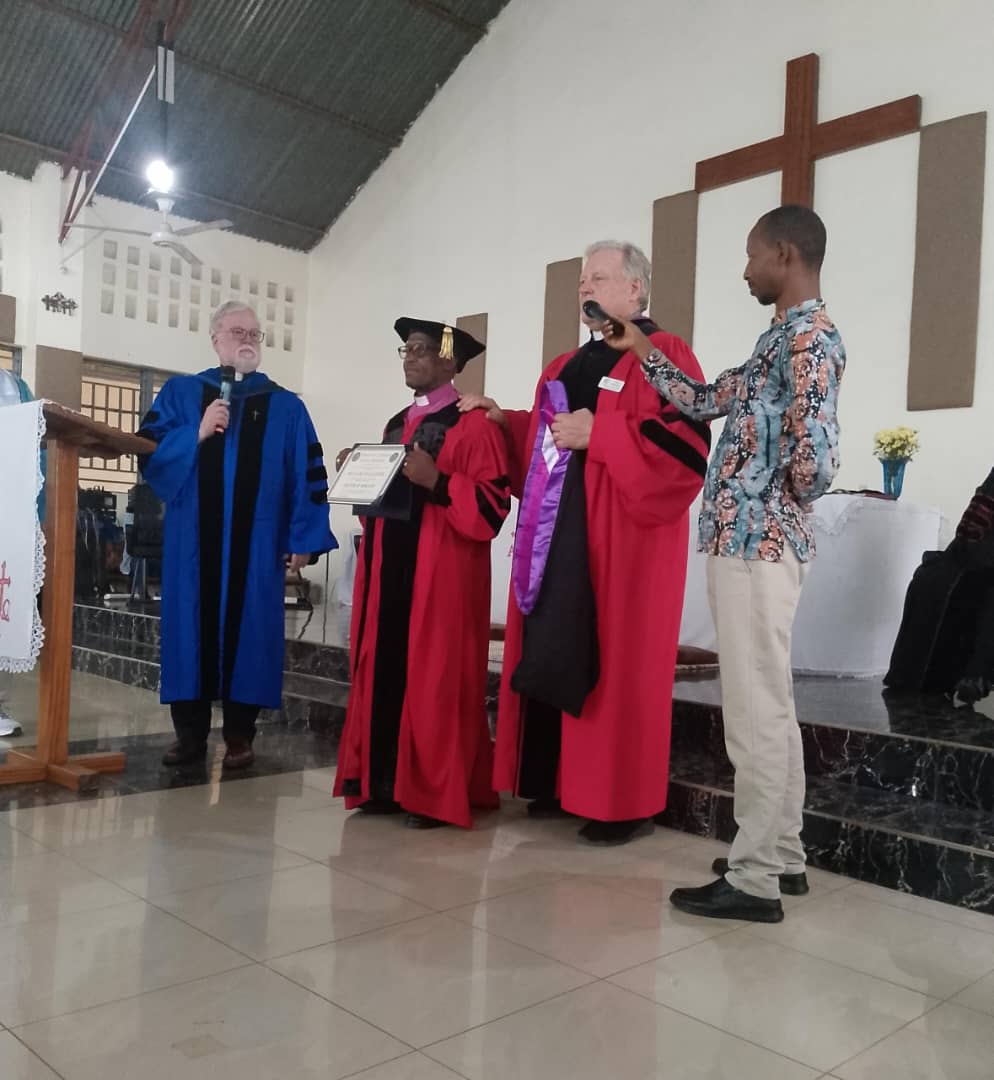
Emmanuel Lutheran Global Seminary offers an alternative for students who are pursuing pastoral ministry while balancing work, family, congregational service, and financial responsibility. Its accredited, competency-based programs are designed for practical learning in the student’s ministry context.
The model emphasizes academic rigor, Lutheran theological tradition, mentorship, vocational discernment, and demonstrable ministerial skills. Students can deepen their preparation while remaining rooted in the communities they may ultimately serve.
The ELGS resource on debt-free ministry explains why financial freedom can strengthen pastoral leadership. When graduates are not defined by loan payments, they may have greater freedom to accept calls shaped by mission, need, and spiritual guidance.
The right decision will differ for each student. Some will require a traditional campus setting, while others will flourish through an affordable seminary model that integrates learning, employment, and congregational service. What matters is choosing a pathway that honors the calling, protects the household, and prepares the student to serve the church with wisdom and courage.
The broader mission is shared by students, congregations, mentors, and theological educators: to prepare faithful leaders who can preach, teach, lead, train, serve, and transform communities through faith in action. Prospective students are invited to compare costs carefully, seek wise counsel, and consider whether an affordable, accredited, competency-based path can support their vocational future.
For more information or to discuss your personal discernment and formation plan, please reach out to us via email at Team@ELGS.org. We would be excited to speak with you!
Comments